← Back to work
Web App · ESG Compliance · Live on bevolve.ai
Turning a working regulatory feed into a policy tracker sustainability teams can read at a glance.
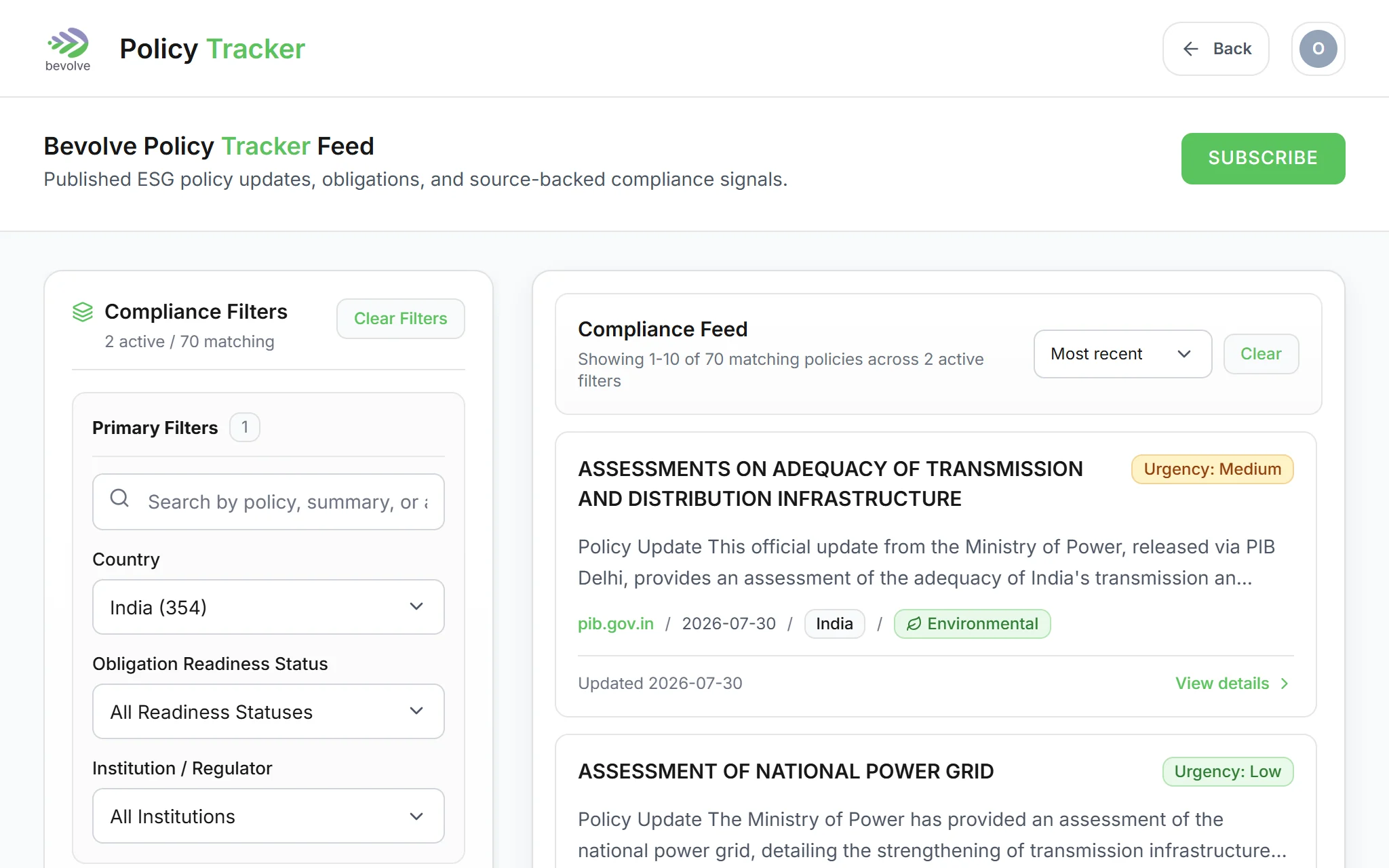
Sustainability policy intelligence from Bevolve. It brings policy and regulatory developments across regions, regulators, and ESG categories into one feed, so ESG, legal, risk, and strategy teams can see what changed, where it applies, when it matters, and where it came from. Live at bevolve.ai/policy-tracker.
Policy changes are scattered across government websites, consultation papers, and regulatory portals. The first version of the tool already pulled them together, but its interface wasn't yet polished or brand-aligned enough to put in front of sustainability teams.
I reworked the initial UI/UX, from research and flows to a coded front end, into a working, brand-aligned interface: a three-step conversational setup, a compliance feed with urgency and source on every card, filters organised by region, sector, and E/S/G pillar, and a structured report for every policy.
Shipped as part of Bevolve's product suite, with a public explore mode anyone can try from the Policy Tracker page.
Policy changes are scattered across government websites, consultation papers and regulatory portals. Bevolve's research team had built a first version that pulled them together, but its interface was not yet ready for sustainability teams.
The brief was to take that working tool to a polished, brand-aligned product. I was the solo designer, working with Bevolve's research and engineering teams over 6 months, from research and flows to a coded front end.
I worked with Bevolve's research team, who curate the policies, and spoke to sustainability and compliance users among Bevolve's clients about how they track regulation today.
Updates arrive through news, newsletters and consultants, often after the consultation has closed.
What changed, and how urgent is it? If a card answers both, people know whether to read on.
Compliance teams act only on summaries they can trace to the regulator, the date and the original document.
Two personas in the same FigJam format as the platform modules. They came from the research team's users and Bevolve's client conversations.
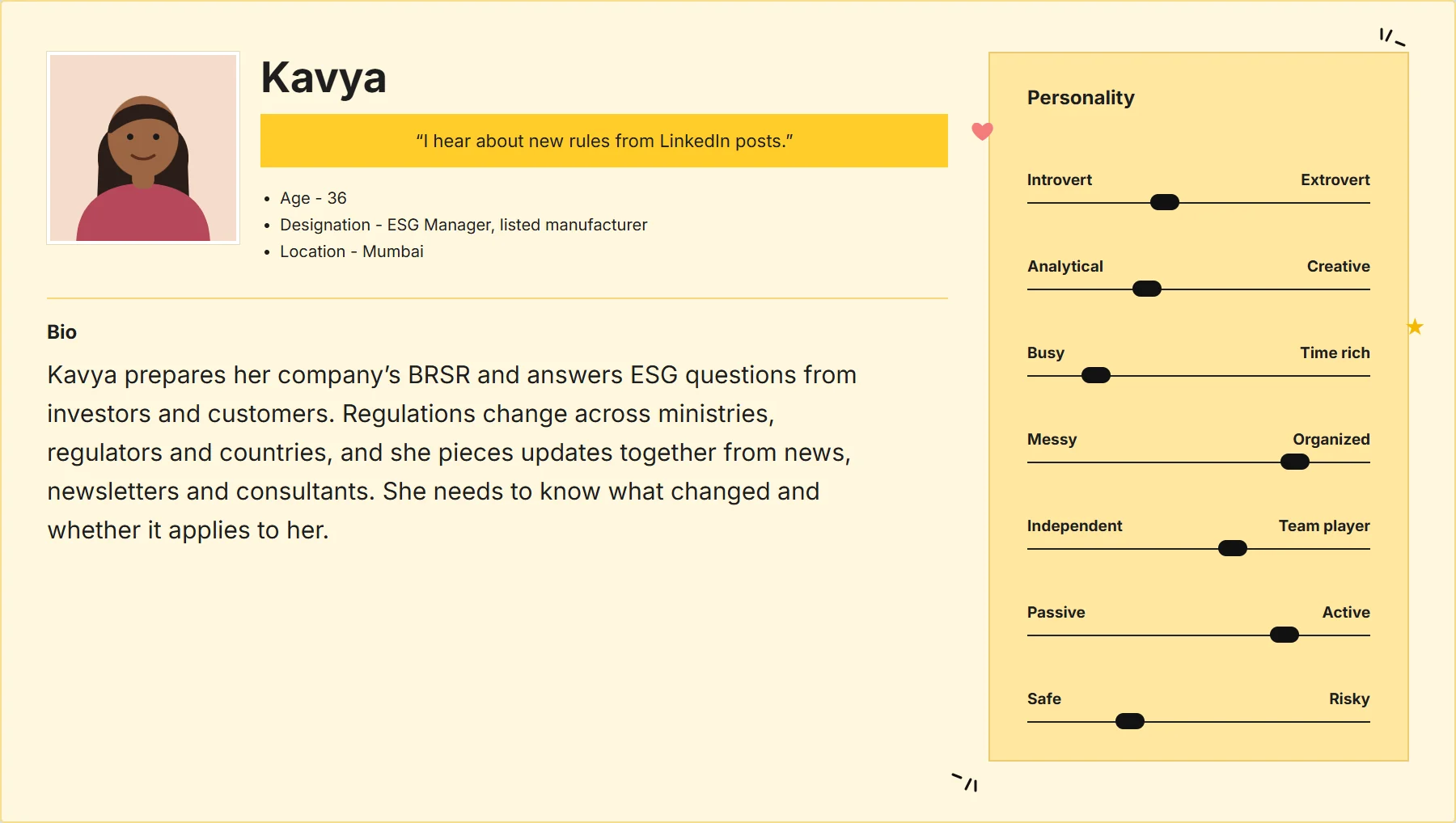
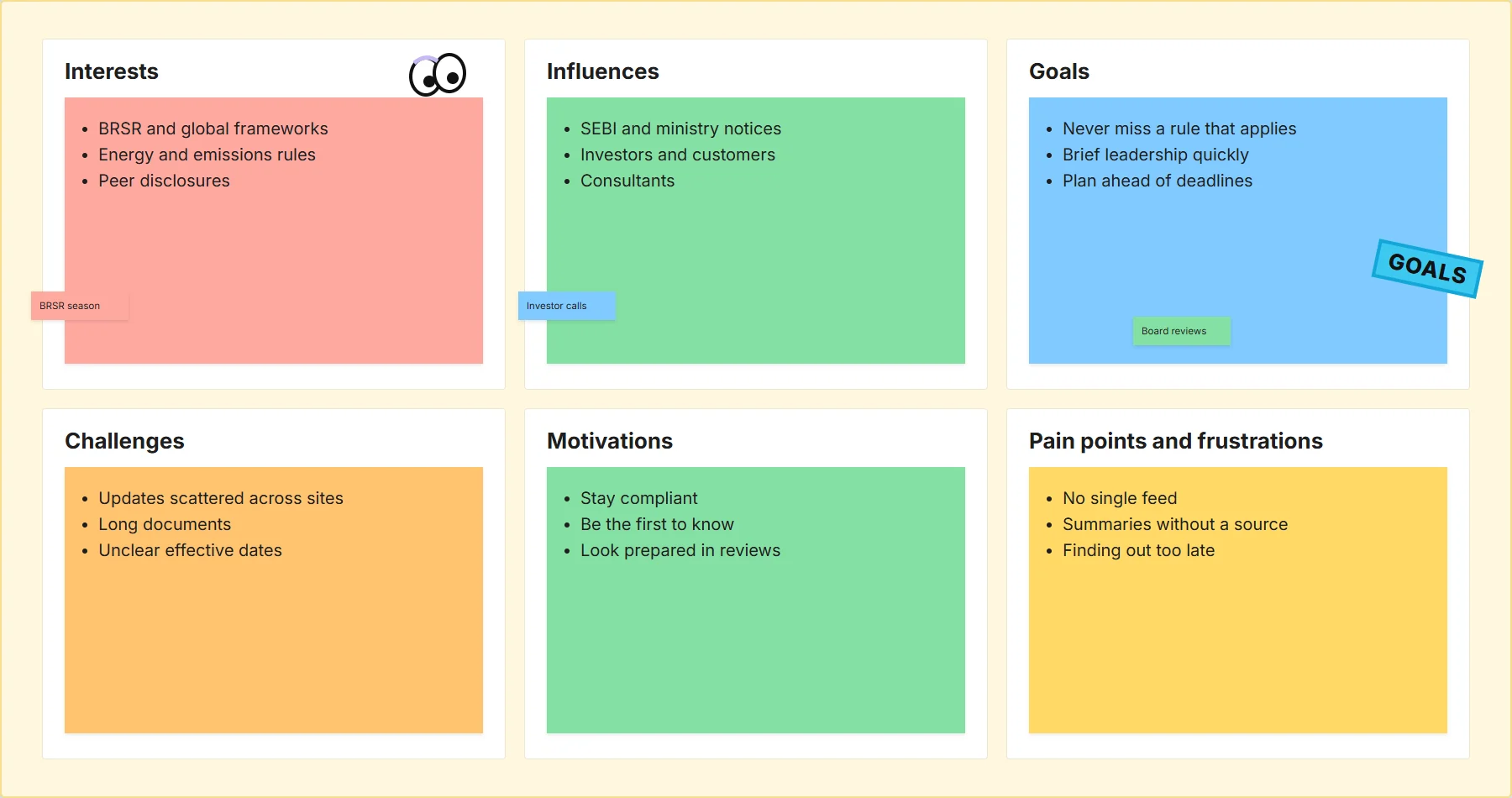
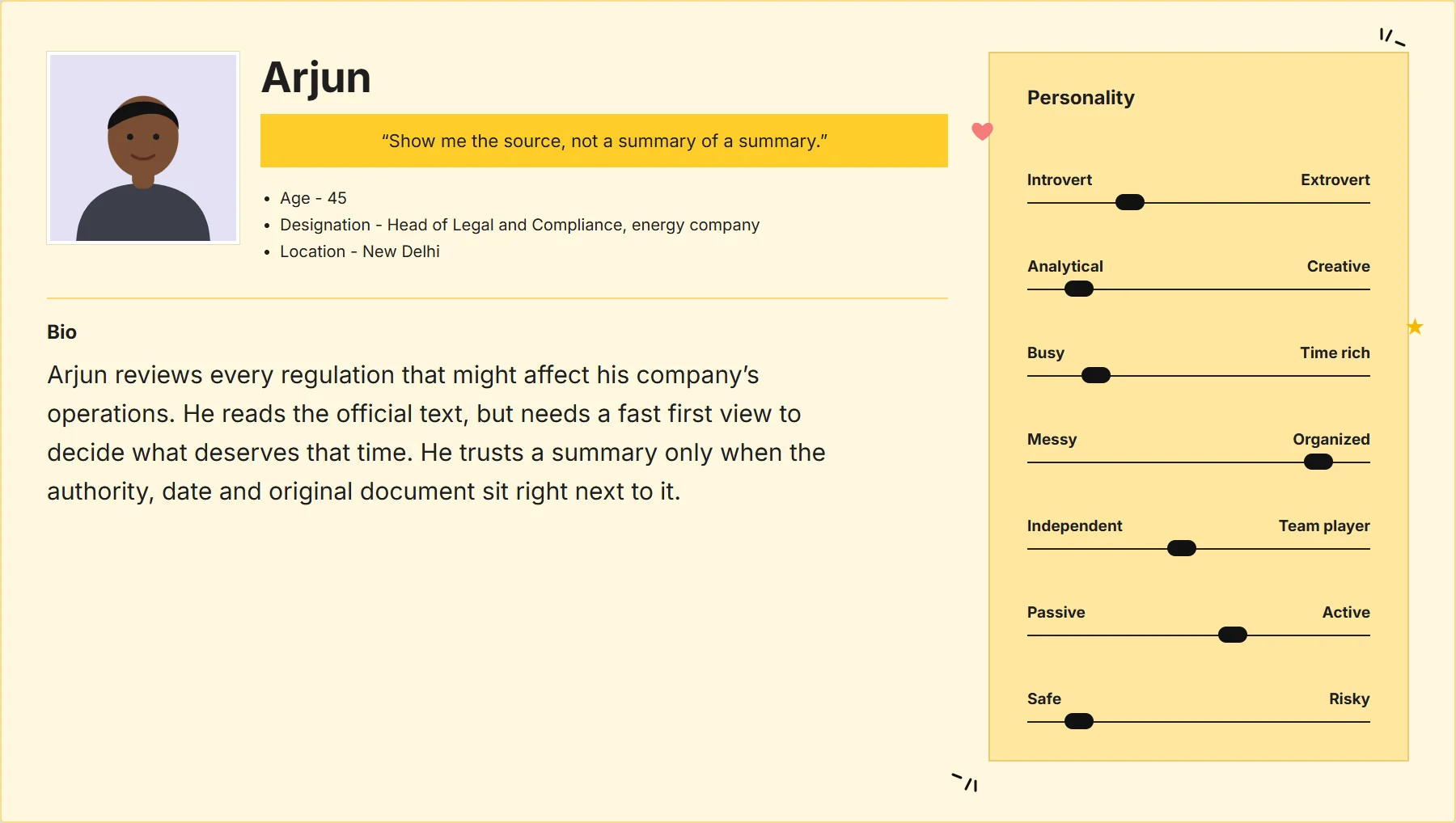
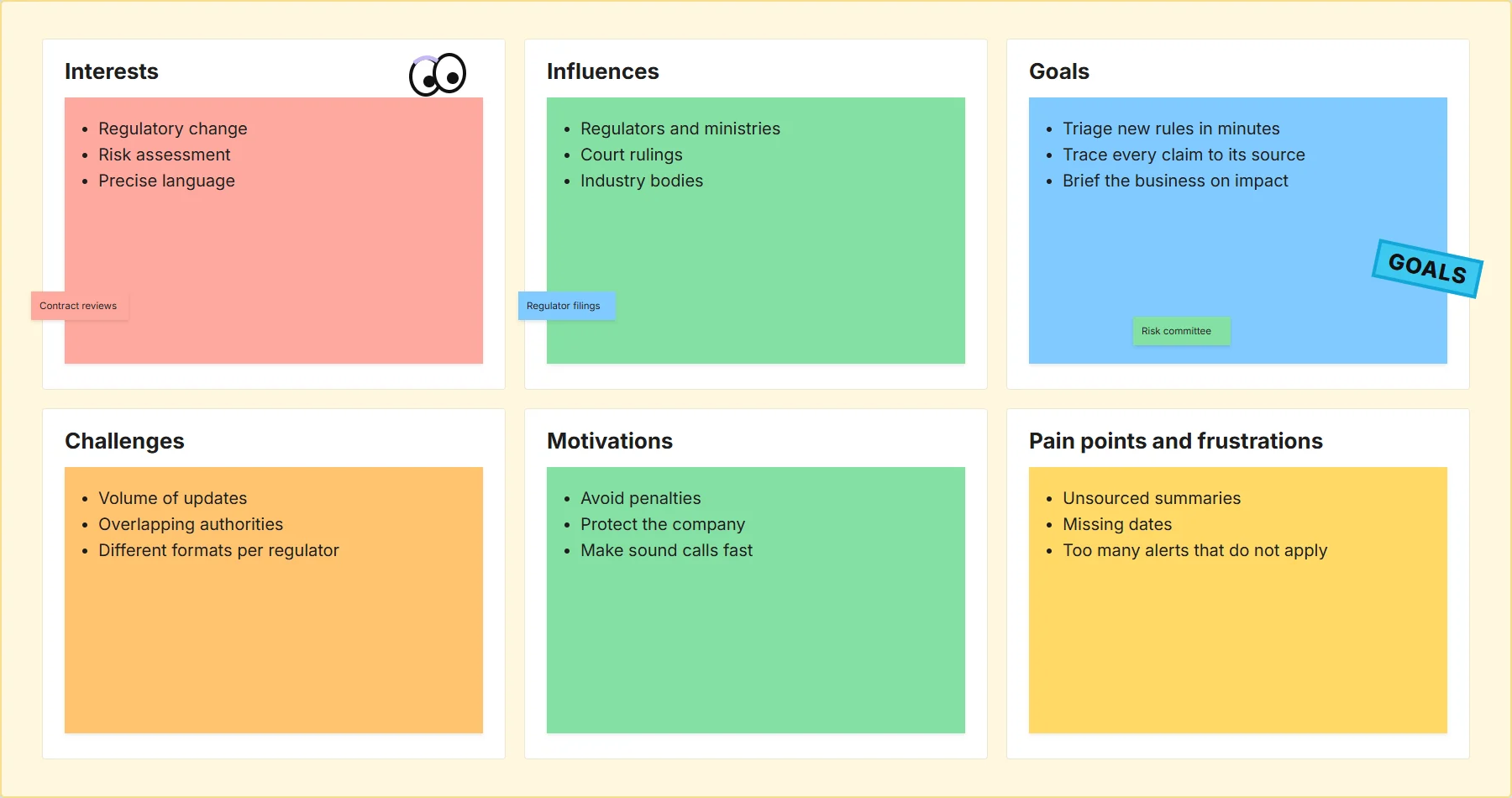
| Hear | Find | Check | Understand | Act | |
|---|---|---|---|---|---|
| Doing | A new rule or consultation is published | The team looks for the official text | They check if it applies to them | They work out what changed and when | They brief the business |
| Pain | Spread across many sites | Different formats per regulator | Unclear scope by country and sector | Long documents, buried dates | No shared summary to pass on |
| Design response | One feed across regions and regulators | Source and date on every card | Filters by market, sector and ESG pillar | A report with key changes and a timeline | Business impact in every report |
The first version already had the data. The work was deciding what shows where, so a card answers the first question at a glance and the report answers everything else.
How might we let a sustainability team see, in seconds, which new rules apply to them and how urgent they are, with the source one click away?
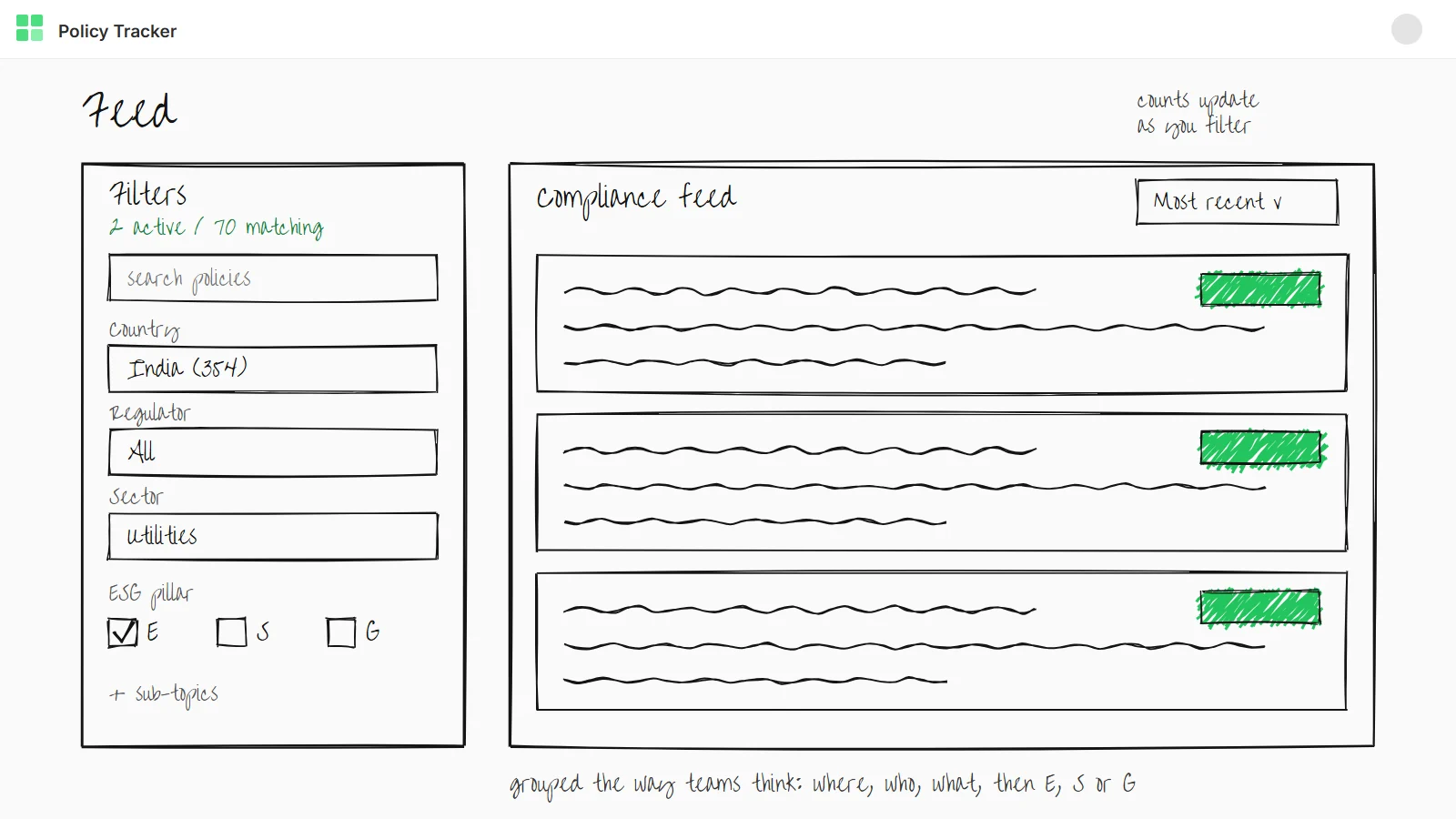
Most of the thinking went into one card. I sketched what it must answer and in what order, then the filters and the report around it.
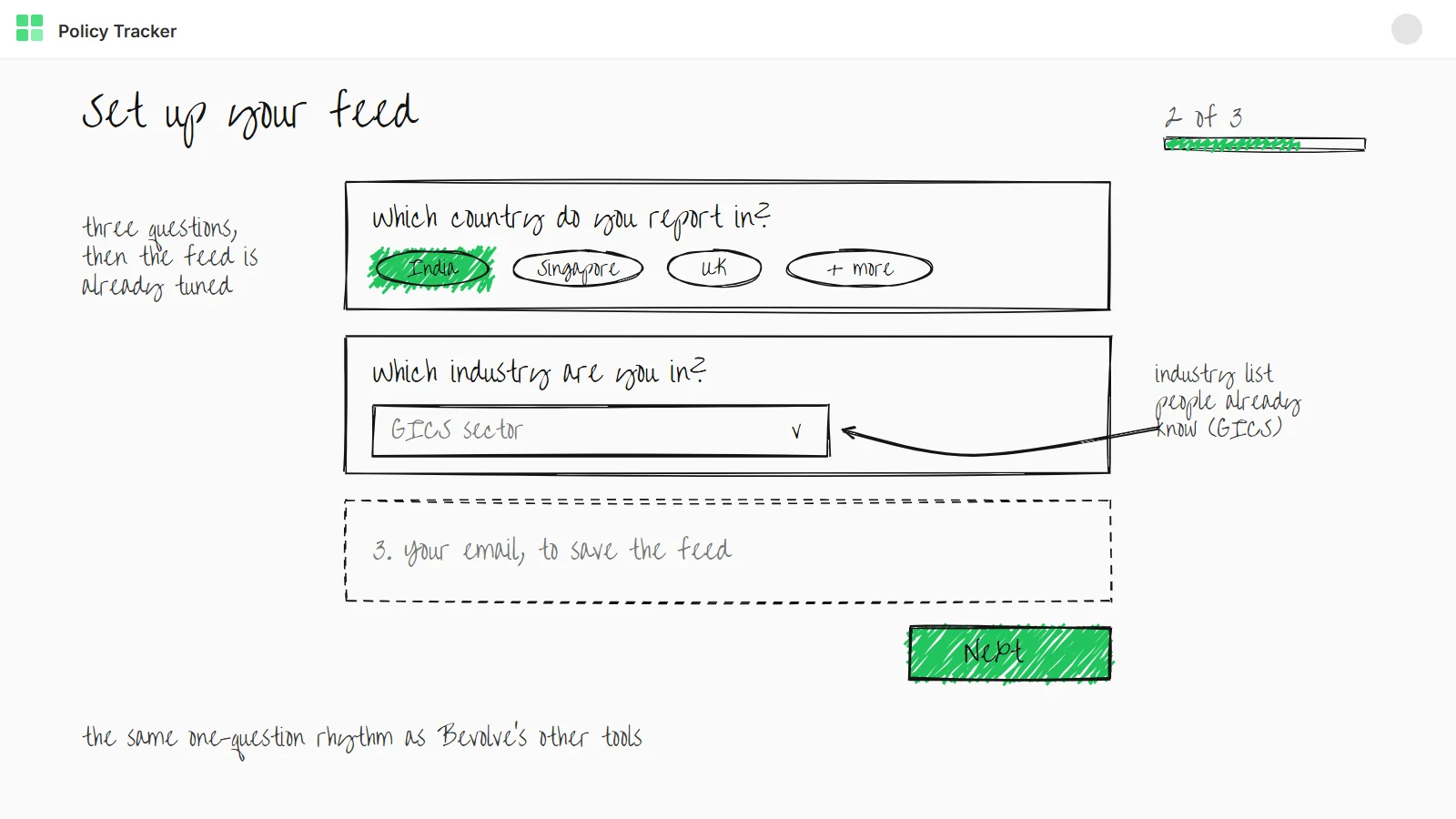
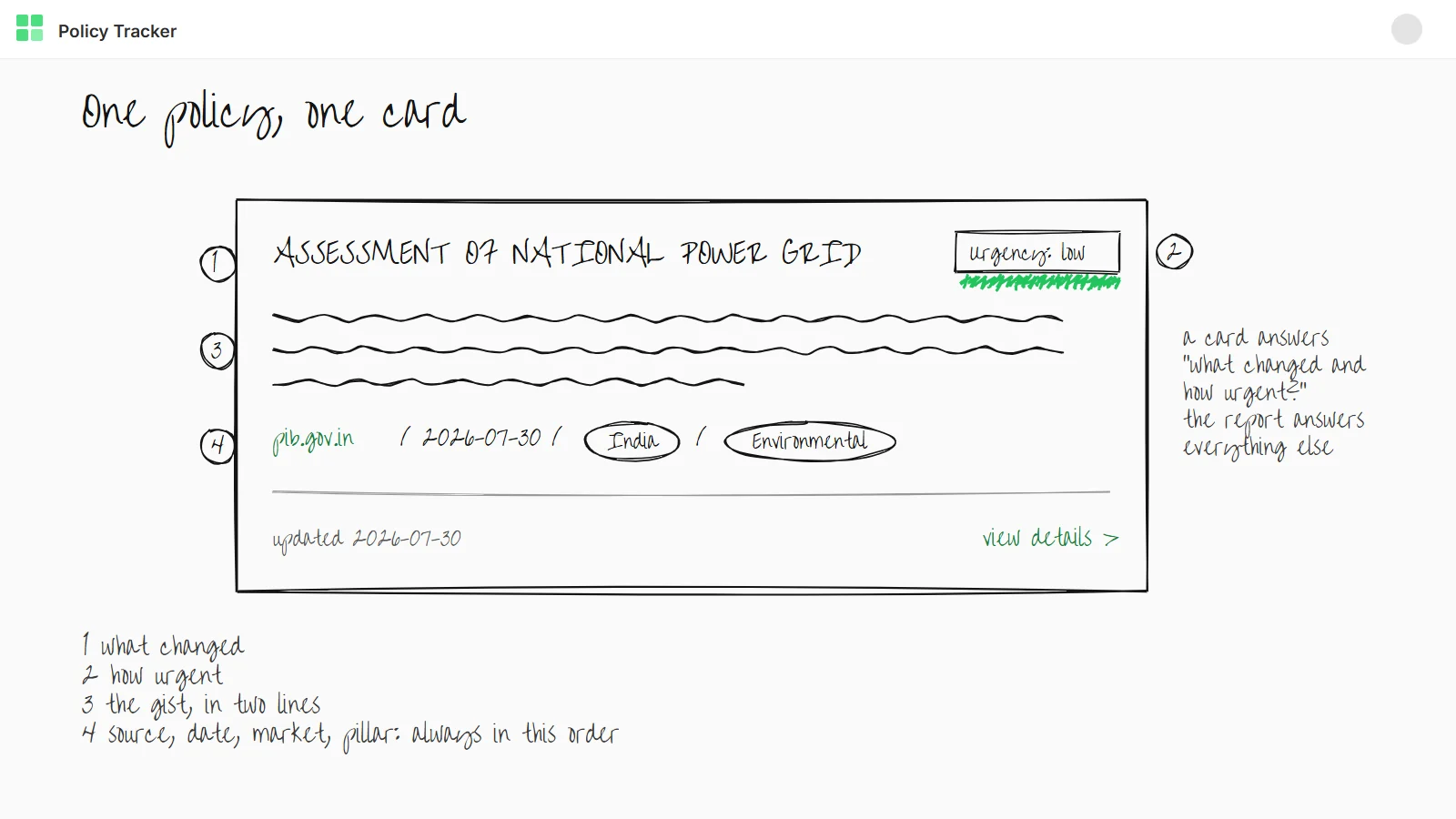
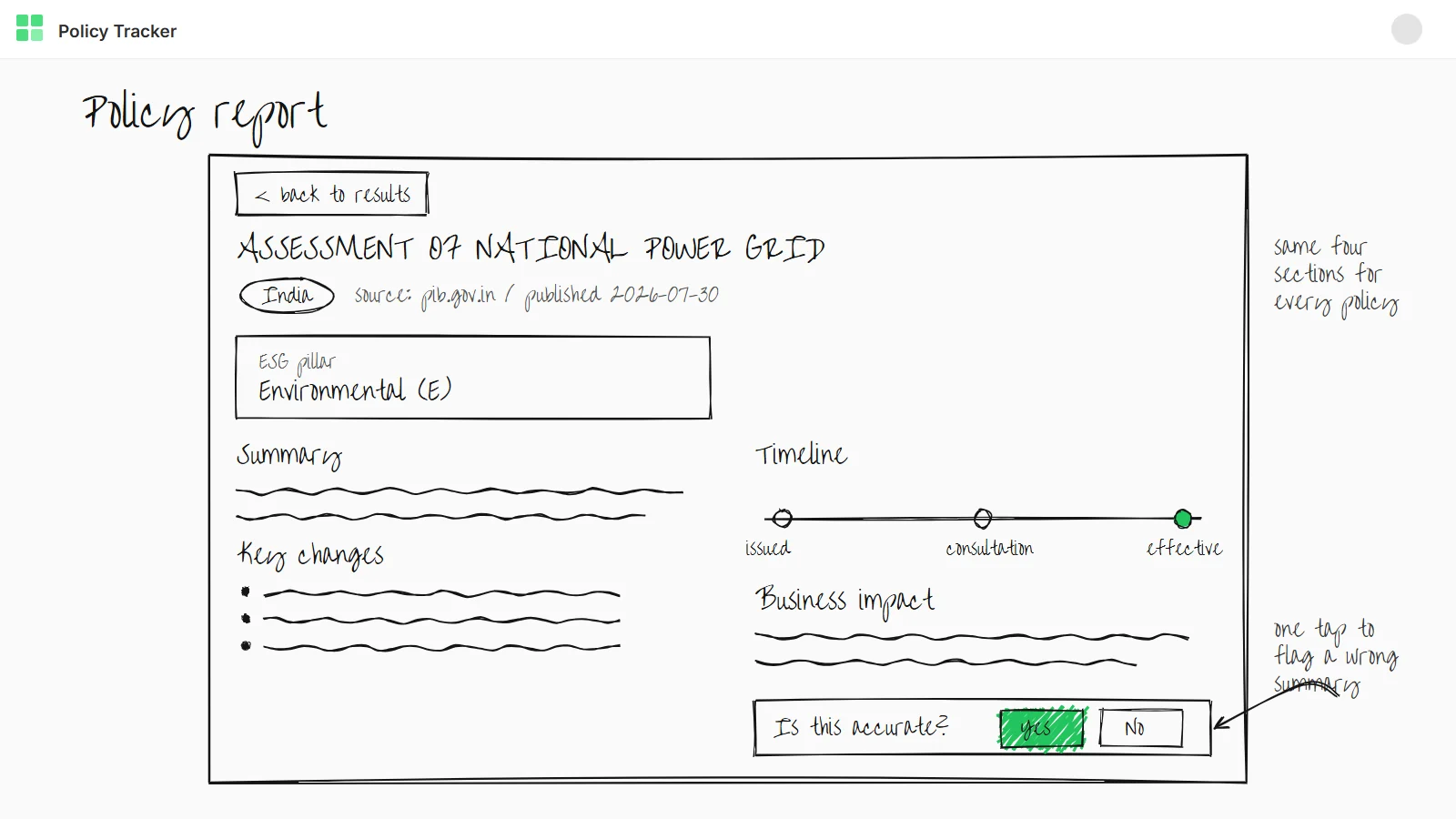
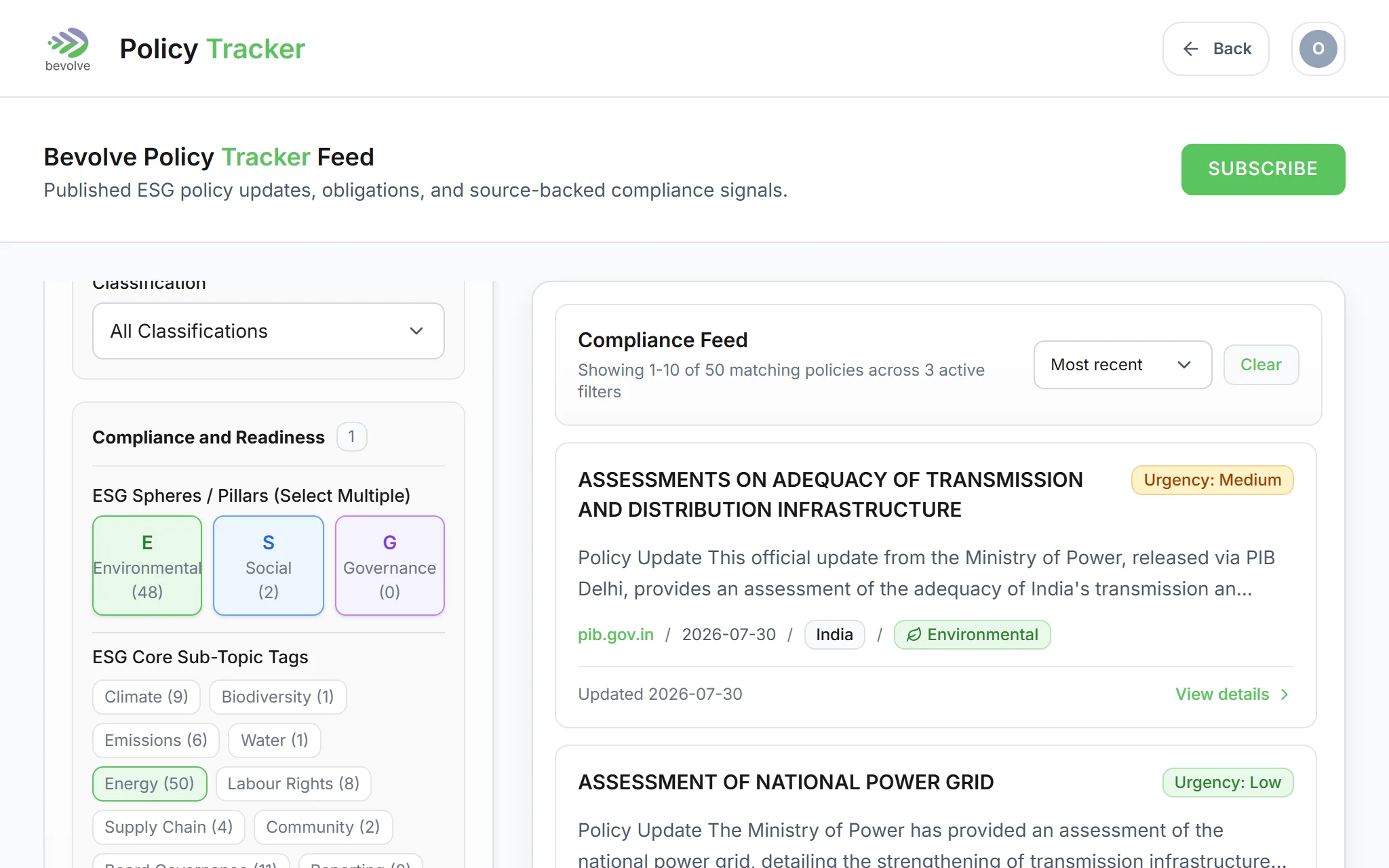
Title and urgency first, then a two-line summary, then source, date, market and ESG pillar. The order never changes, so people learn to scan it.
Country, readiness status and regulator first, then sector, then the E, S and G pillars and their sub-topics. Every filter shows a live match count.
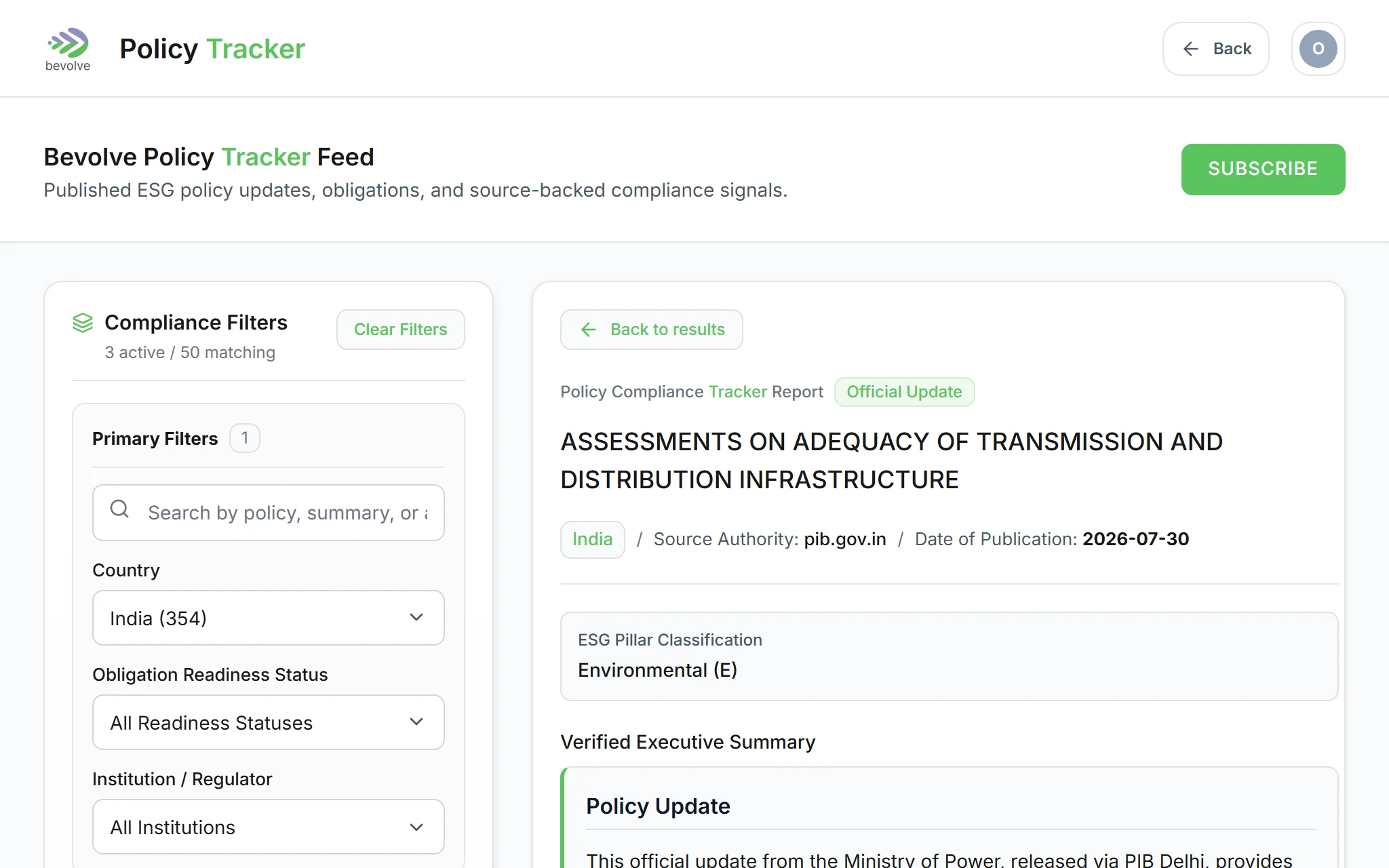
Every report opens with the market, source authority and date of publication, then a verified summary, key changes, timeline and business impact, plus a one-tap accuracy check.
I redesigned the research, flows and UI, and prototyped the front end with Figma Make and Claude Code so engineering worked from code, not static files. The research team reviewed every card and report format against real policies before release.
The first screen below is a recording of the real product: setting up the view, scanning the feed, filtering by an ESG topic, and opening a full policy report. Every screen after it is captured from the live app.
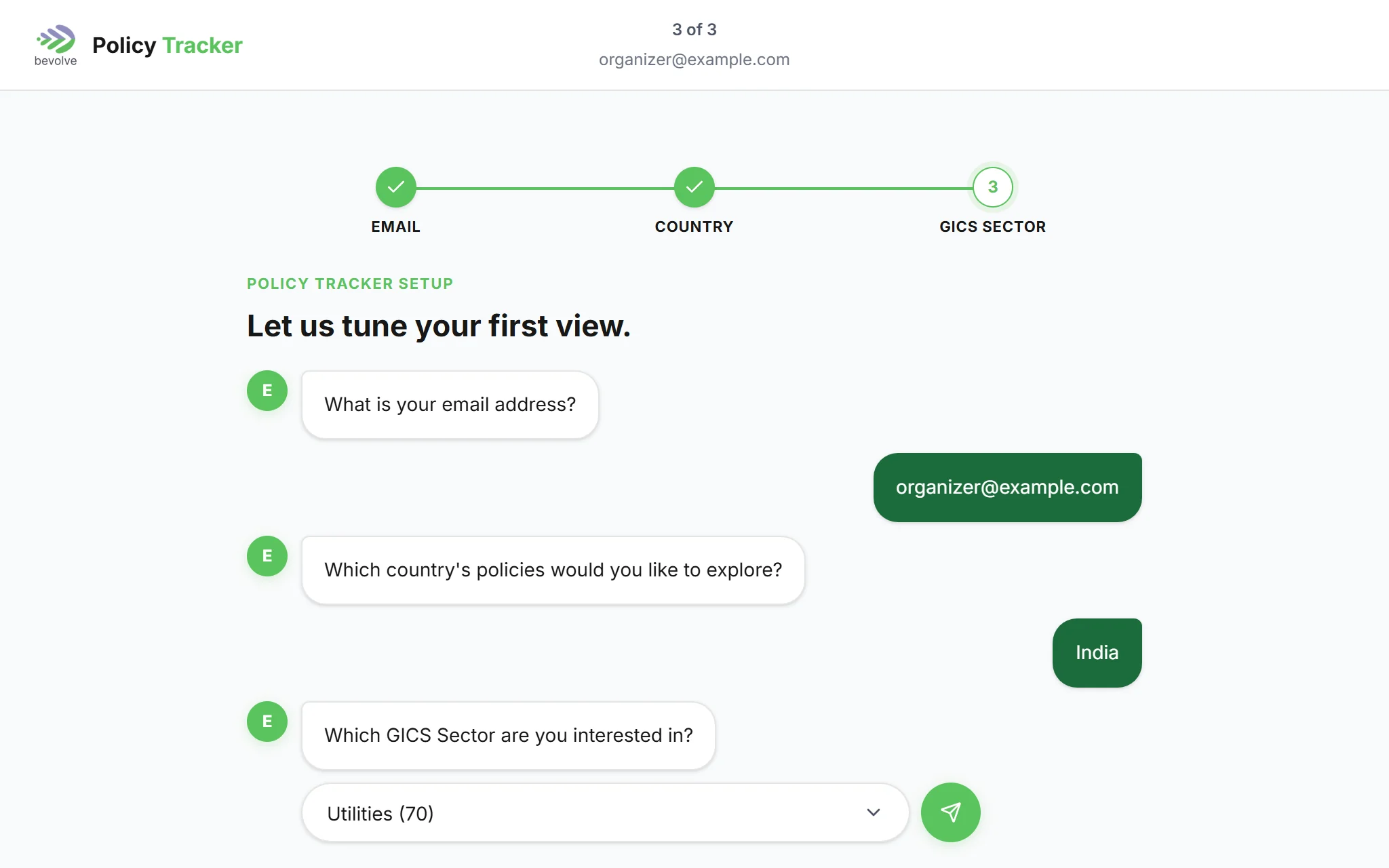
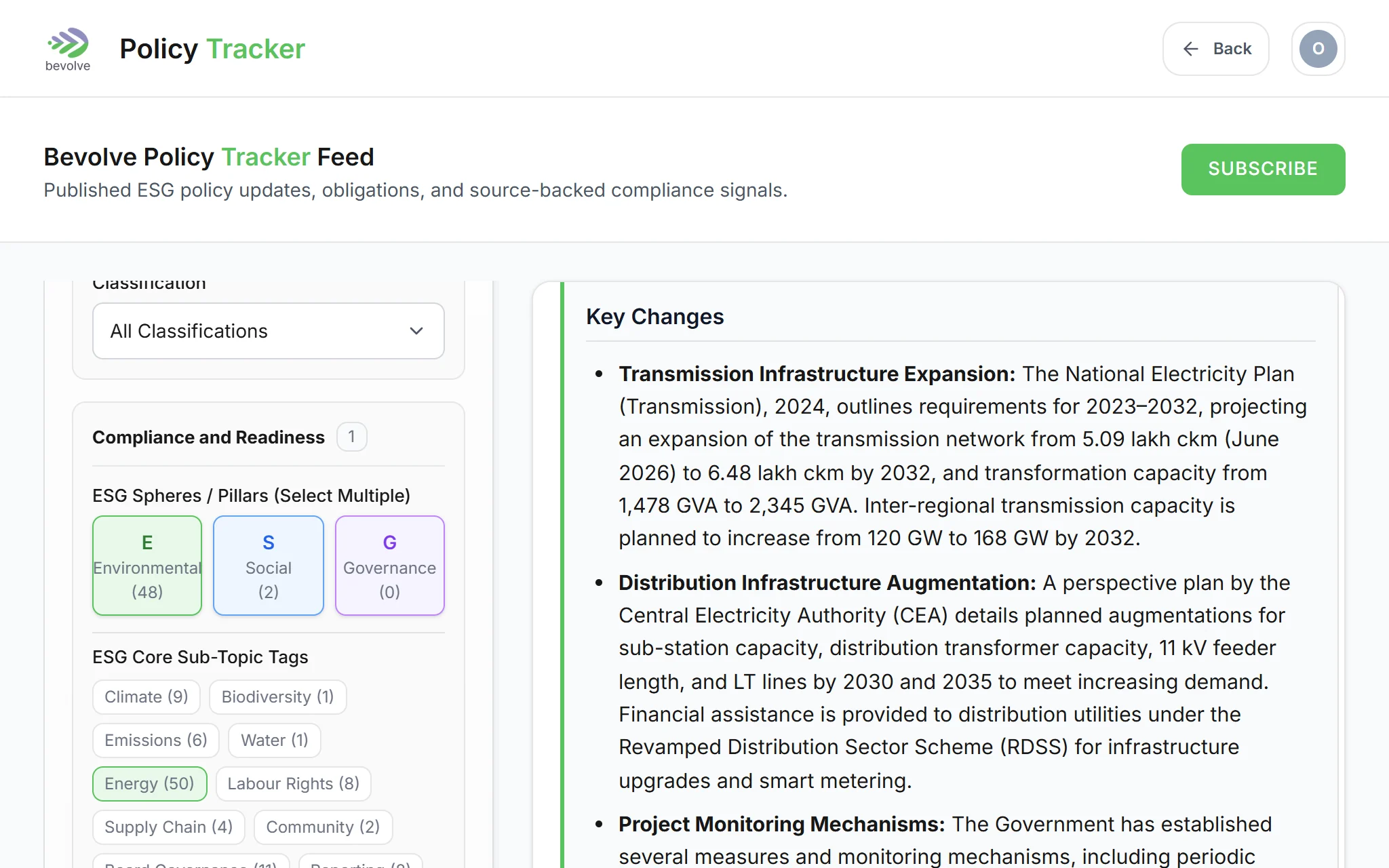
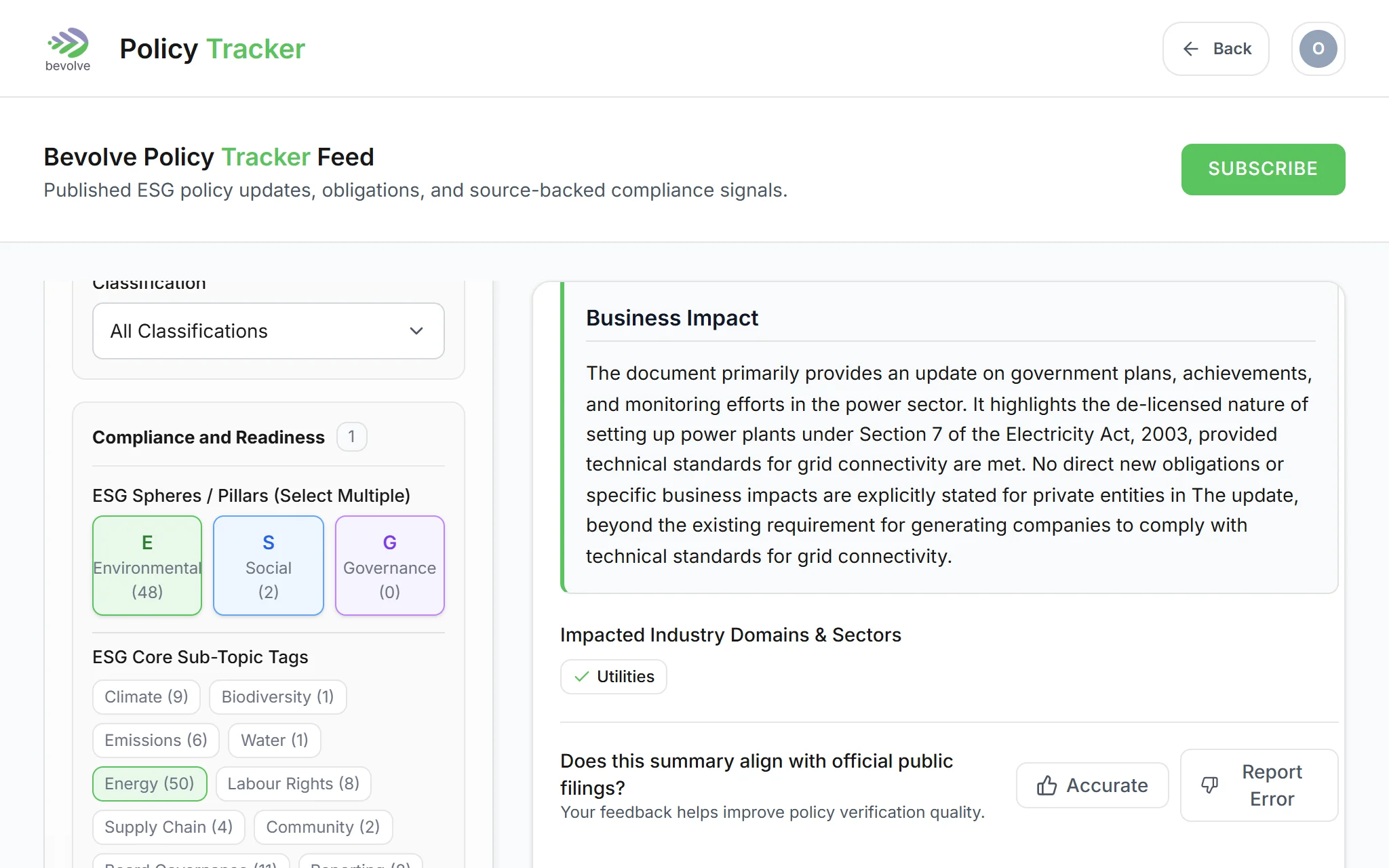
The Policy Tracker is live as part of Bevolve's product suite, with a public explore mode anyone can try from the Policy Tracker page.
When the content is dense, the design is mostly about order. Fixing the order of a card mattered more than any colour or layout choice.
Add change alerts, so a team gets a nudge the day a policy on its watchlist moves, instead of having to check the feed.